


Tinnitus Treatment in KL: Care Options From Ear to Neck
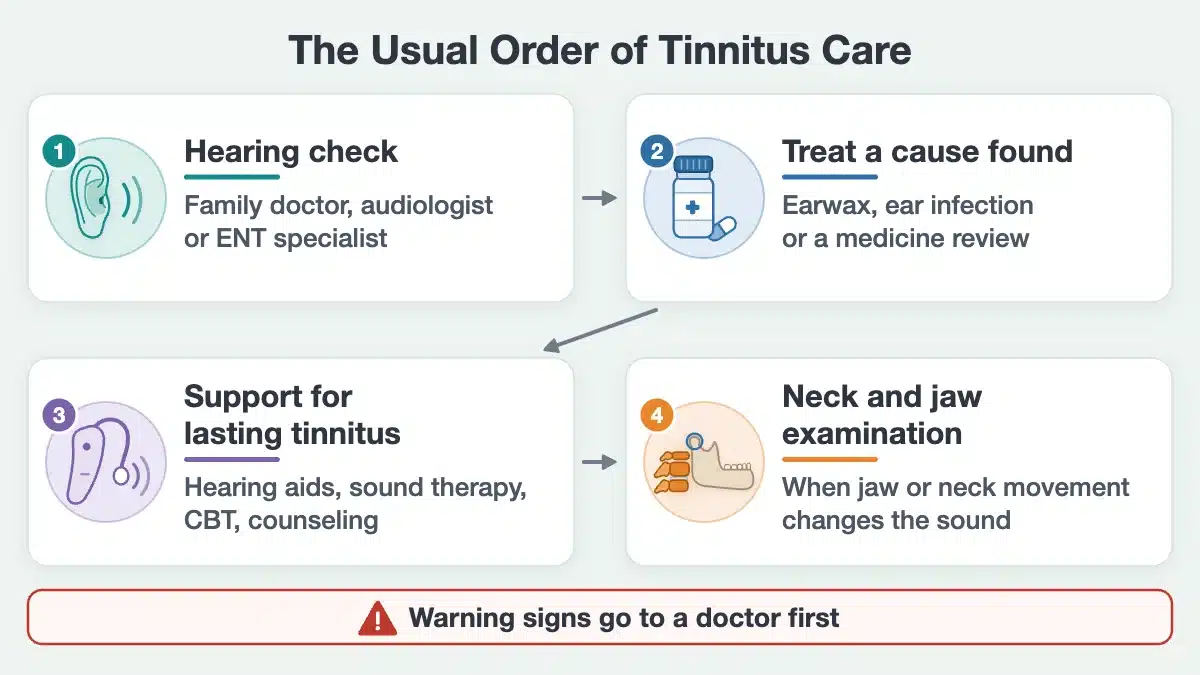
Tinnitus treatment in Malaysia begins by tracing where the sound comes from, because each cause is handled in its own way. Ringing in the ears, buzzing, hissing or humming is most often linked to the hearing system. Hearing is usually checked first in KL, by a family doctor, an audiologist or an ear, nose and throat (ENT) specialist.
Frequent causes include hearing loss in later life or after loud noise, a build-up of earwax, ear infections and some medicines. Meniere's disease, an inner ear disorder, can also bring it on. When a cause such as earwax is found and treated, the sound may settle. Lasting tinnitus is usually managed with hearing aids where hearing is reduced, sound therapy, or cognitive behavioral therapy (CBT), a talking therapy.
In some people the sound changes when the jaw clenches or the head turns, a sign that the neck or jaw plays a part. Care for that part pairs gentle, non-rotatory chiropractic care with physiotherapy, precise exercise and hands-on soft tissue work. It sits beside hearing care, never in place of it. Further down are the research, who provides each kind of care, warning signs, care for older adults, follow-up and fees.
This guide, Tinnitus Treatment in Malaysia: Options, Neck and Jaw Care, is published by Chiropractic Specialty Center, Bukit Damansara (KL) main center: WhatsApp+60 17 269 1873 Call+603 2093 1000
Tinnitus Treatment: Key Takeaways
| Question | Short answer |
|---|---|
| What tinnitus treatment options are there in Malaysia? | Audiologists fit hearing aids and give sound therapy and counseling; psychologists give CBT; ENT clinics treat ear disease. A US guideline advises against routine drugs and supplements for persistent tinnitus. |
| How is tinnitus care followed up over time? | In Is Chiropractic Safe? 13 Questions Answered, I explain my checkpoints. With no change by the fifth session, I reassess; by the tenth, we decide together. The active plan ends at maximum medical improvement, then visits become as needed. |
| Who is a tinnitus specialist in Malaysia? | An ENT specialist looks for ear disease, and an audiologist tests hearing and fits hearing aids. A family doctor can refer to both. Chiropractic and physiotherapy cover only the neck and jaw side. |
| How do I choose a tinnitus clinic in Malaysia? | Check that hearing is tested first, that the practitioner is registered, and that care follows an examination. Fees should be stated before care begins, progress measured, and forceful neck pulls never used. |
| Are fees for tinnitus care published? | Yes. Examination RM100; chiropractic adjustment RM150, or RM110 alongside physiotherapy in one visit. Both price pages list every fee. The fee for a plan is explained and agreed before care begins. |
| Is neck care suitable for people over 60? | It can be, after a hearing check and an examination. In Is Chiropractic Safe? 13 Questions Answered, I prefer the Activator to joint-cracking methods once people reach their 40s and show degenerative changes. |
| Can a chiropractor treat tinnitus? | Not tinnitus that starts in the ear. When jaw clenching or head movement changes the sound, I examine the upper neck and jaw. No study cited here tested chiropractic care itself for tinnitus. |
| Is there a cure for tinnitus? | Not for long-lasting tinnitus, as yet. When earwax or an ear infection is behind the sound, treating it may quiet it, and many people grow used to lasting tinnitus over time. |
| Did neck physiotherapy change tinnitus in trials? | A Belgian trial gave 12 neck physiotherapy sessions to 38 adults with severe tinnitus and neck complaints. Afterward, 53 percent reported substantial improvement, and 24 percent six weeks later. A 2016 review rated the wider evidence low in quality. |
Tinnitus Treatment Guide: Sections at a Glance
- What Research Shows on Neck Care and Ringing in the Ears
- Asking About a Neck and Jaw Assessment in Kuala Lumpur
- Tinnitus Treatment Options in Malaysia: Who Provides What
- What Each Cause of Ringing in the Ears Usually Needs
- Chiropractic for Tinnitus: What I Examine and Use
- Physiotherapy for Ringing in the Ears With a Neck or Jaw Link
- Is There a Cure for Tinnitus?
- Warning Signs: Ringing in the Ears That Needs a Doctor First
- Searching for the Best Tinnitus Clinic in Malaysia? What to Check First
- Living With Ringing in the Ears: Sleep, Posture and Background Sound
- Further Reading: Jaw, Upper Neck and Related Conditions
- FAQ: What Patients Ask Before a First Visit
What Research Shows on Neck Care and Ringing in the Ears
Studies of the neck and jaw in tinnitus are few and mostly small.
At a hospital referral center, 87 adults with long-lasting tinnitus were examined by an ENT doctor and a physiotherapist. In 37 of them, 43 percent, the tinnitus was classed as cervicogenic somatic tinnitus, meaning it began or worsened together with neck pain. A positive manual rotation test and adapted Spurling test pointed to a higher chance of that diagnosis. A low score on a neck questionnaire, or no trigger points, made it less likely (Michiels and colleagues, 2015).
A 2016 review found six studies of physical therapy for tinnitus: four treated the neck and two the jaw. All six reported positive effects on tinnitus. The reviewers still judged the risk of bias high and the evidence low in quality. They asked for larger, better trials before any recommendation (Michiels and colleagues, 2016).
A 2017 review notes that in some people the tinnitus changes with movements of the jaw joint, head and neck, eyes or limbs. Patients with jaw joint disease showed consistent improvement after targeted jaw treatment. The authors add that ENT doctors often overlook this form, and that screening for it is needed (Ralli and colleagues, 2017).
In research I have read in Frontiers in Neuroscience, nearly 40 percent of jaw joint (TMJ) conditions are linked to tinnitus. A Swedish study in that journal looked from the tinnitus side. Jaw joint complaints were reported by 36 percent of people with severe tinnitus and 19 percent with any tinnitus (Edvall and colleagues, 2019).
A 1999 paper in the American Journal of Otolaryngology described tinnitus that goes with a disorder of the head or upper neck. It sits in the ear on the same side, usually with normal hearing tests and no balance complaints. The author called it somatic (craniocervical) tinnitus (Levine, 1999).
Tinnitus UK, formerly the British Tinnitus Association, notes that people with jaw joint problems or neck injuries are more likely to have tinnitus. Its page adds that successful treatment of the underlying problem can improve tinnitus symptoms. It also says a dentist can often diagnose jaw joint problems.
I plan neck and jaw care from what the examination finds, beside hearing care.
Asking About a Neck and Jaw Assessment in Kuala Lumpur
Once hearing has been checked, and jaw or neck movement still changes the sound, call or WhatsApp either center to ask about an assessment. Both provide chiropractic together with physiotherapy, and the contact page lists directions and opening hours.
The first visit checks the upper neck, the jaw and posture, and reads your hearing results beside them.
- Bukit Damansara (KL, main center): Call +603 2093 1000 or WhatsApp +60 17 269 1873 to see the Bukit Damansara / KL center.
- Bandar Sri Damansara (KL): Call +603 6262 5777 or WhatsApp +60 12 455 6939 to see the Bandar Sri Damansara center.
Tinnitus Treatment Options in Malaysia: Who Provides What
The main options are treating any cause that is found, hearing aids, sound therapy, CBT and counseling. Neck and jaw care is added for some people. The table shows who provides each and what the evidence says.
| Option | Who provides it | What it involves, and the evidence |
|---|---|---|
| Treating a cause that is found | A family doctor or an ENT specialist | Removing earwax, treating an ear infection, or reviewing a medicine with the doctor who prescribed it. Ear surgery may deal with an ear condition yet leave the tinnitus in place (Baguley and colleagues, 2013). |
| Hearing aids | An audiologist | Amplifying sound when a hearing test shows loss, even mild or one-sided loss (Baguley and colleagues, 2013). A US guideline recommends a hearing aid evaluation when persistent, bothersome tinnitus comes with documented hearing loss (Tunkel and colleagues, 2014). |
| Sound therapy | An audiologist, or at home | Soft background sound, such as quiet music, white noise or a sound generator, so the tinnitus stands out less. The guideline lists it as an option, and the NHS advises against total silence. |
| Cognitive behavioral therapy (CBT) | A psychologist | A talking therapy that changes how a person thinks about and reacts to the sound. The US guideline recommends it, and a 2013 review found the strongest evidence for it (Langguth and colleagues, 2013). |
| Tinnitus counseling and retraining therapy (TRT) | An audiologist | Learning about tinnitus; retraining therapy adds sound therapy so the brain tunes the sound out. The NHS says it is unclear whether retraining therapy works for everyone. |
| Medicines and supplements | A prescribing doctor | Antidepressants, anticonvulsants, anxiety medicines, ginkgo, melatonin or zinc. The US guideline advises against routine use for tinnitus, and a review found no drug treatment that works for it (Baguley and colleagues, 2013). |
| Neck and jaw care | A chiropractor, a physiotherapist or a dentist | Chiropractic care in KL and physiotherapy for the upper neck and jaw, with dental care for the jaw joint. They are used when movement changes the sound or tension in the neck goes with it. The trials are small and tested physical therapy and jaw treatment, not chiropractic care as such. |
In Is Chiropractic Safe? 13 Questions Answered, my wording is this: “Holistic not meaning natural. Holistic meaning comprehensive.” For the neck and jaw side of tinnitus, comprehensive means chiropractic and physiotherapy together, beside hearing care.
What Each Cause of Ringing in the Ears Usually Needs
Each cause usually needs its own care. A family doctor or an ENT clinic deals with blockages, infections and medicines, and an ENT specialist manages inner ear disease.
Tinnitus is a sound heard with nothing outside making it. People describe ringing, buzzing or whistling, and some hear roaring, rushing water, wind or escaping air. When it interferes with daily activities, it deserves a check.

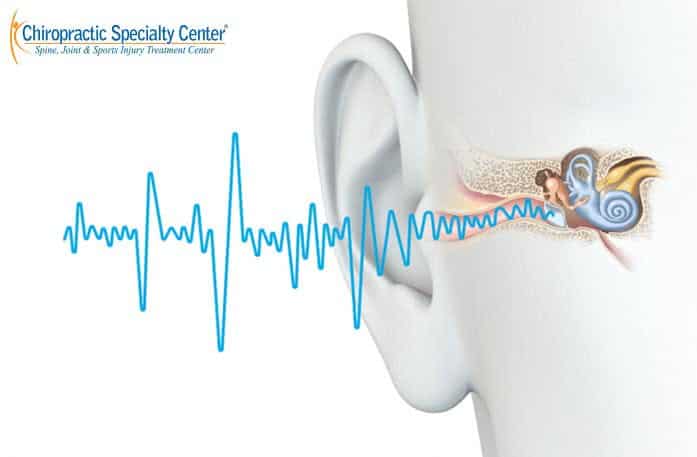
Most ringing in the ears links back to the hearing system. Hearing changes come in two kinds: sensorineural, from the inner ear or hearing nerve, and conductive, from the ear canal or middle ear. In one study, people with tinnitus and normal standard hearing tests still showed a weaker hearing nerve response, a pattern called hidden hearing loss. The brain's hearing pathways appear to turn up their own activity in response (Schaette and McAlpine, 2011).
Persistent tinnitus deserves an early hearing test, because some hearing changes go unnoticed. Some people with long-standing tinnitus also report more difficulty following speech in noisy places, which an audiologist can test.
Earwax, Hair and Objects in the Ear Canal
A build-up of earwax, a loose hair or a small object in the ear canal can touch the eardrum. That can bring ringing, a feeling of fullness or muffled sound. A family doctor or an ENT clinic checks the ear and removes the blockage. The NHS earwax page warns against fingers or objects such as cotton buds, which push earwax further in. An early check is wiser than leaving a blockage in place for months.

Pressure From Sinuses, Flying or Diving
Nasal congestion and sinus problems can change pressure in the middle ear, the air-filled space behind the eardrum. The result is often brief ringing or a blocked feeling. Changes in altitude when flying, diving or snorkeling can do the same. Very loud blasts, such as explosions, are another sudden strain on the ear.
When sinus trouble or pressure changes keep returning, a doctor checks the ears and sinuses first. The head and neck can then be examined as well.
Medicines That Can Affect Hearing
Some medicines can cause ringing in the ears as a side effect, which is called ototoxicity. It often passes, though with some medicines it lasts. Medicines linked with it include:
- Quinine-based medicines.
- Anti-inflammatory painkillers (NSAIDs).
- Some chemotherapy medicines.
- Some antibiotics.
- Diuretics, also called water tablets.
Never stop or change a prescribed medicine on your own. Speak with the doctor who prescribed it, who can weigh its benefits against its risks.
Meniere's Disease, Vertigo and Tinnitus
Meniere's disease affects the inner ear. Its attacks combine spinning vertigo, ringing, a full feeling in the ear and hearing that comes and goes. An ENT specialist diagnoses and manages it.
The NHS lists treatment that manages its symptoms. It includes medicines for vertigo, nausea and vomiting, hearing aids, therapy for the tinnitus and balance rehabilitation (NHS, 2026). Research on non-invasive methods for Meniere's disease remains limited. When the neck or jaw also changes the sound, those areas can be examined alongside ENT care.
For vertigo, the warning signs section below gives the NHS stroke list. The ear ringing guide covers Meniere's symptoms, and my separate page on Meniere's disease adds more.
Other Health Conditions Linked to the Sound
Ringing in the ears can go with other health conditions, though it does not mean one is present. These include:
- Blood vessel (circulatory) problems.
- Metabolic conditions such as diabetes or thyroid disorders.
- Balance (vestibular) disorders.
- Stress-related (psychosomatic) conditions, anxiety and depression.
- Autoimmune conditions.
- Rare structural problems.
A doctor looks into these when the history points to one.
Chiropractic for Tinnitus: What I Examine and Use
Chiropractic care for tinnitus covers only the neck and jaw side of the sound, and it starts with an examination. The marker I look for is called somatic modulation: the sound shifts when the jaw clenches, the jaw joint is pressed or the head turns. When that happens, the neck and jaw are examined alongside an ear assessment, never instead of it. The ear ringing guide's section on somatic tinnitus lists the signs.
At the first visit, the examination covers:
- The skull base and upper neck, from C0-C1 down to C3-C4.
- Jaw movement and alignment, and the chewing muscles.
- Posture, including the head-forward position of phone and laptop use.
- Your hearing results, read alongside the audiologist's or ENT specialist's findings.
Signs that the jaw joint plays a part include:
- Tenderness in the jaw or face.
- Jaw movement that has become uncomfortable.
- Clicking or popping when chewing or speaking.
The upper cervical spine and the jaw joint (TMJ) lie close to the ear. In my view, nerve, muscle and blood vessel pathways link them with tinnitus, and researchers have proposed some of these links:
- C0-C1: the skull meets C1 here, just below the brainstem, and the vertebral arteries pass this level on their way into the skull.
- C1-C2: in my view, this region plays a part in position sense and in nerve input toward the ear. Levine proposed that upper neck signals reach a hearing relay station in the brainstem, the dorsal cochlear nucleus (Levine, 1999).
- C2-C3 and C3-C4: strain at these levels can add muscle tension. It can also refer sensations to the back of the head and around the ears, areas the C2 and C3 nerves supply.
- The jaw joint: Tinnitus UK gives three possible reasons for a link. The chewing muscles lie near the muscles of the middle ear, and a ligament joins the jaw to a tiny hearing bone. The joint's nerves also connect with hearing areas of the brain.
For each level in detail, see Occiput & Atlas (C0-C1), C1-C2 Segment, C2-C3 Segment, C3-C4 Segment and Neck Stiffness Care.
My care for the neck and jaw side of tinnitus can include:
- Gentle chiropractic manipulation that is non-rotatory using the Activator instrument; forceful high-speed twisting is avoided.
- At C1, a non-force contact touches the atlas from the side, with the slightest pressure. For a stable neck, the Activator at level one, its lowest setting, may be added, cushioned on the soft tissue beside it.
- At the same visit, the jaw, the rib joints at the spine and breastbone, and the lower neck are adjusted too.
- Physiotherapy: hands-on soft tissue work, gentle mobilization of the upper neck, and exercises for the deep neck muscles.
- Jaw (TMJ) balancing techniques and jaw exercises for jaw strain.
- Advice on posture, sleep, screen use and soft background sound.
Is Chiropractic Safe? 13 Questions Answered gives my reason for combining the two professions: “Don't choose between one or the other. Choose both.”
The factors I look at, and how each is approached:
| Factor | Possible link with tinnitus | How it is approached at CSC |
|---|---|---|
| Upper neck misalignment | In my view, it may alter nerve signals and blood flow to the hearing pathways. In some people, C1's side projection narrows the internal jugular vein (Ding and colleagues, 2020). | A non-force contact at C1 and gentle, non-rotatory adjustments. |
| Jaw (TMJ) dysfunction | In my view, it can irritate nerve pathways near the ear. Jaw movements change tinnitus in some people (Ralli and colleagues, 2017). | Jaw muscle work, jaw exercises, and the jaw adjusted at the same visit as C1. |
| Muscle tension | Long-term neck pain can aggravate tinnitus, according to Tinnitus UK. | Hands-on soft tissue work, chosen exercises and, where the examination allows, gentle stretches. In my Back Pain to Leg Pain talk, I caution against general neck stretching with a disc problem. |
| Head-forward posture | In my view, the head-forward load of laptops and phones strains the lower neck at least as much as the upper neck. It may also press on blood vessels. | Workstation and posture changes, with sleep advice. |
| Forceful neck traction | In my view, it can overstress delicate tissues and may worsen tinnitus or bring new symptoms. | Never used at CSC. |
Ring Dinger®, Y-Strap and towel pulls jerk the neck with high-speed traction. In my view, for someone with tinnitus they may:
- Overstretch the ligaments where the skull meets the neck.
- Disturb blood flow in the vertebral artery, which runs through small openings beside the neck bones.
- Irritate upper neck nerves, whose signals, Levine proposed, reach a hearing relay in the brainstem.
In Neck Cracks Are Dangerous, I explain why such pulls are dangerous: the small joints of the neck, its discs and the vertebral artery. My advice in that video is plain: “And if they do want to do this for you, ask them to stop.” As I see it, the harm can take more than one form: a small risk of stroke, or a neck problem made worse.
My non-rotatory, gentle and targeted chiropractic approach puts stability and precise joint movement first. The article on Ring Dinger® neck pull risks covers these methods in detail.
Care is kept within what you can comfortably tolerate. Report any discomfort to the chiropractor at once; my video Is Chiropractic Safe? 13 Questions Answered asks the same. Possible effects and risks are explained before care begins.
For follow-up, I reassess anyone whose findings have not changed by the fifth session, a checkpoint from my video Is Chiropractic Safe? 13 Questions Answered. By the tenth, we decide together whether to continue. Active care stops at the point I call MMI, maximum medical improvement. MMI is reached when two or three further weeks of care change nothing in the retested findings. Visits then become as needed, with home exercises and daily-living advice.
Conservative care, when I use the term, is always focused care. It starts from what the jaw and neck examination and any imaging document, targets those causes across the whole area, and does no harm. There are many forms of conservative care that are useless, and routine neck treatment is not what I mean.
Physiotherapy for Ringing in the Ears With a Neck or Jaw Link
Physiotherapy for this kind of ringing in the ears, sometimes called cervical or cervicogenic tinnitus, concentrates on the jaw, neck and upper back muscles. It suits people whose sound changes with neck or jaw movement, or began alongside neck pain.
In a randomized trial, 38 adults with severe tinnitus and neck complaints had 12 neck physiotherapy sessions across six weeks. Nineteen started at once and nineteen after a six-week delay. Tinnitus and neck scores fell significantly after treatment, and the authors called for larger studies (Michiels and colleagues, 2016).
Tinnitus UK notes that neck pain or stiffness, including after a car accident, makes tinnitus more likely. For tinnitus linked to the neck, it says a family doctor may suggest painkillers and physiotherapy.
At both KL centers, physiotherapy for neck-linked tinnitus may include hands-on soft tissue work, gentle mobilization and exercises for the deep neck and shoulder muscles. It is planned together with chiropractic care, as described on the page about chiropractic combined with physiotherapy.
Is There a Cure for Tinnitus?
Not yet for long-lasting tinnitus. A 2010 paper notes that, although several approaches exist, there is as yet no cure (Rauschecker and colleagues, 2010). No drug has been found that switches it off (Baguley and colleagues, 2013). A US guideline advises against routine drugs and supplements (Tunkel and colleagues, 2014).
Tinnitus with a treatable cause is different. A family doctor first looks for something treatable, such as an ear infection or a build-up of earwax (NHS, 2024). Treating such a cause may quiet the sound.
The NHS adds that tinnitus rarely signals anything serious and can settle on its own (NHS, 2024). Many people get used to the sound over time, so it fades into the background. For 1 to 2 percent of all people, though, it severely affects daily life (Langguth and colleagues, 2013). Research describes the brain learning to tune the signal out, through links between hearing and emotional areas (Rauschecker and colleagues, 2010).
Neck and jaw care is not expected to change tinnitus that begins in the ear.
Warning Signs: Ringing in the Ears That Needs a Doctor First
A doctor checks any of the signs below before neck or jaw care begins.
According to the NHS, tinnitus needs a call to 999 or a trip to an emergency department when:
- It began after a head injury.
- It comes with sudden hearing loss, weak muscles in the face, or a spinning feeling (vertigo).
Do not drive there yourself; have someone drive you or call 999 for an ambulance, and take your medicines with you (NHS, 2024).
Ask for an urgent appointment with a family doctor when the tinnitus beats in time with your pulse. The NHS also advises a doctor's visit when tinnitus:
- Is there regularly or constantly.
- Is getting worse.
- Bothers you, for example by disturbing sleep or concentration, or by making you anxious and depressed.
Vertigo can also be a stroke sign. On its Meniere's disease page, the NHS says to call 999 when spinning vertigo comes with any of these:
- One side of the face drooping, at the mouth or the eye.
- Being unable to raise both arms and keep them up.
- Difficulty speaking; the speech may sound slurred or garbled.
- Sudden trouble seeing with one eye.
- Feeling very off-balance.
These can mean a stroke, which usually comes on suddenly and is a medical emergency. Do not drive yourself to the emergency department (NHS, 2026).
Searching for the Best Tinnitus Clinic in Malaysia? What to Check First
No tinnitus clinic is the best for everyone. A good fit is a clinic whose examination and methods match what causes the sound. Check these points:
- A hearing test first, from an audiologist or an ENT clinic, with the results read before any neck or jaw care.
- For a chiropractor, registration with the Ministry of Health in chiropractic.
- The practitioner's qualification.
- An examination before any care.
- Findings and the plan explained in plain words.
- Methods suited to the condition: gentle, non-rotatory care where a disc is damaged or joints are worn, and no forceful neck pulls.
- Fees stated before care begins.
- How progress is measured.
- Referral to a doctor, or to an emergency department for the warning signs above, when the signs call for it.
Call or WhatsApp the clinics you are considering, describe the sound and what changes it, and ask how they would assess it.
Living With Ringing in the Ears: Sleep, Posture and Background Sound
Sleep, stress and the sound around you can all make tinnitus more or less noticeable (NHS, 2024).
On the neck and back, I put it plainly in my Back Pain to Leg Pain talk: “The most important thing is not the treatment. The most important thing is to make lifestyle changes.” For the neck side of tinnitus, those changes cover sleeping posture, sleep habits, diet and nutrition, and how a computer is used. When symptoms are significant, I start care alongside those changes.
For sleep on the back, my talk suggests a bolster under the knees and a pillow under the neck. Since no pillow is perfect, I always tell patients to roll a towel and place it under the neck. Tied with a ribbon at each end, the roll suits a sleeper who hardly moves, and it can go in the wash every week. A contour pillow with a thin and a thick side is another choice.
At a desk, the position of the monitor matters, since in my view a head pushed forward loads the whole neck. Set up the workstation before long hours at it.
Soft background sound, such as quiet music or white noise, may draw attention away from ringing in the ears. The NHS advises against total silence. The NHS's other coping steps are listed in the ear ringing guide.
In one large Swedish study, people with jaw joint complaints more often named stress as the cause of their tinnitus (Edvall and colleagues, 2019).
FAQ: What Patients Ask Before a First Visit
Can neck problems really cause tinnitus?
In some people, they appear to play a part. Of 87 adults with lasting tinnitus at one hospital, 37 had a type that began or worsened with neck pain (Michiels and colleagues, 2015). In my view, upper neck misalignment or muscle tension can affect the nerves and blood flow linked with hearing. Most tinnitus still traces back to the hearing system, so hearing is tested first.
Is chiropractic safe when neck or jaw movement changes the sound?
It can be, under the right conditions. Is Chiropractic Safe? 13 Questions Answered, my video, names two. Care is safe, I say there, “when it's performed by a competent chiropractor who is also registered.” For it to be safe, I add, “it must be condition based.” For tinnitus, that means a hearing check and an examination come first. Methods are gentle and non-rotatory, with no forceful twisting or pulling. Emergency care comes first after a head injury, or when sudden hearing loss, weak face muscles or a spinning feeling (vertigo) comes with it. A sound that keeps time with the pulse calls for an urgent appointment with a family doctor.
Should I avoid the Ring Dinger or Y-Strap?
Yes. In my view, aggressive traction of this kind may make tinnitus worse, and I never use it. Ring Dinger® and Y-Strap pulls jerk the neck with force, which can strain its small joints, ligaments and discs and disturb the vertebral artery. In Neck Cracks Are Dangerous, I explain why such methods are not justified at any age. Care at CSC uses gentle, targeted methods instead, kept within comfort.
How many sessions are usual, and when is progress reviewed?
It depends on the findings, other health problems, and how closely the advice is kept. My video Is Chiropractic Safe? 13 Questions Answered sets my checkpoints. I review progress by the fifth session; if nothing has changed, I look for the reason rather than wait. By the tenth, we decide together whether care continues. Active care ends at maximum medical improvement (MMI), and as-needed visits follow. Hearing care continues with the audiologist or ENT specialist on its own schedule.
Can older adults have neck care for ringing in the ears?
Yes, with gentler methods and after a hearing check, since an audiologist's results guide the plan. From their 40s onward, when joints show degenerative changes, I avoid methods that make the joint crack. The video Is Chiropractic Safe? 13 Questions Answered puts it briefly: “Instead, the Activator is better.” At C1, a non-force contact may be used. Everything stays within what feels comfortable, and any discomfort is reported at once.
What does a neck and jaw assessment cost in KL?
From the CSC quotation dated June 25, 2026, the examination costs RM100 for new and returning patients. An adjustment costs RM150, or RM110 if physiotherapy is given in the same visit. A standard physiotherapy unit costs RM57 to RM180, or RM27 to RM150 alongside chiropractic, depending on the service. These fees are the same at both Kuala Lumpur centers. What the examination finds, the methods chosen and the number of visits planned decide the total. The chiropractic price in Kuala Lumpur and physiotherapy fees in Kuala Lumpur pages list every item and any separate charge. The fee for a plan is explained and agreed before care begins.
Which services are referred elsewhere, such as hearing aids or counseling?
Hearing tests, hearing aids, sound generators, tinnitus counseling, tinnitus retraining therapy and cognitive behavioral therapy are provided by audiologists, ENT specialists and psychologists. Chiropractic and physiotherapy at CSC cover the neck and jaw side only, so these are arranged with a family doctor or specialist. Bring their reports to the first visit, so care can be planned around them.
Which specialist looks after ringing in the ears?
An ENT specialist, also called an otolaryngologist, examines the ears for disease, and an audiologist measures hearing and fits hearing aids. A family doctor is often the first stop and can refer to both. A US guideline asks for a prompt, full hearing test in three cases (Tunkel and colleagues, 2014). They are a sound in one ear only, one that has lasted six months or more, and one that comes with trouble hearing. Chiropractors and physiotherapists look after the neck and jaw side.
What happens at the first visit?
A first visit lasts anywhere from half an hour to two hours, by the complexity of the problem, and I do not hurry it. Bring earlier medical records, your hearing results and any scans on CD or film. Wear comfortable clothing, and report even slight discomfort during the examination. I examine the upper neck, jaw and posture, then explain the findings and a plan before any care begins.
Do I need an MRI or X-ray first?
Usually not for tinnitus alone. A US guideline advises against head and neck imaging for tinnitus that is not one-sided and not pulsing (Tunkel and colleagues, 2014). That advice holds when there are also no neurological signs and no uneven hearing loss. For the neck, Is Chiropractic Safe? 13 Questions Answered gives my answer: “No, not every patient needs diagnostic imaging.” When imaging is needed, it is decided case by case after the examination.
How to Read This Guide
Where I give my own view, I write in the first person. When the view comes from one of my videos or talks, I name it. Research is cited by first author and year, with full details in the list that follows. Study results describe groups, so they cannot predict how one person's tinnitus will respond. This guide is not a diagnosis; a hearing test and an examination are needed for that, and the advice of your own doctor comes first.
References and Sources
- Baguley D, McFerran D, Hall D. Tinnitus. Lancet. 2013;382(9904):1600-1607.
- Ding JY, Zhou D, Pan LQ, et al. Cervical spondylotic internal jugular venous compression syndrome. CNS Neurosci Ther. 2020;26(1):47-54.
- Edvall NK, Gunan E, Genitsaridi E, et al. Impact of temporomandibular joint complaints on tinnitus-related distress. Front Neurosci. 2019;13:879.
- Langguth B, Kreuzer PM, Kleinjung T, De Ridder D. Tinnitus: causes and clinical management. Lancet Neurol. 2013;12(9):920-930.
- Levine RA. Somatic (craniocervical) tinnitus and the dorsal cochlear nucleus hypothesis. Am J Otolaryngol. 1999;20(6):351-362.
- Michiels S, Van de Heyning P, Truijen S, De Hertogh W. Diagnostic value of clinical cervical spine tests in patients with cervicogenic somatic tinnitus. Phys Ther. 2015;95(11):1529-1535.
- Michiels S, Van de Heyning P, Truijen S, Hallemans A, De Hertogh W. Does multi-modal cervical physical therapy improve tinnitus in patients with cervicogenic somatic tinnitus? Man Ther. 2016;26:125-131.
- Michiels S, Naessens S, Van de Heyning P, et al. The effect of physical therapy treatment in patients with subjective tinnitus: a systematic review. Front Neurosci. 2016;10:545.
- National Health Service (NHS). Earwax build-up. NHS website; page last reviewed 5 January 2024.
- National Health Service (NHS). Meniere's disease. NHS website; page last reviewed 11 September 2026.
- National Health Service (NHS). Tinnitus. NHS website; page last reviewed 12 January 2024.
- Ralli M, Greco A, Turchetta R, Altissimi G, de Vincentiis M, Cianfrone G. Somatosensory tinnitus: current evidence and future perspectives. J Int Med Res. 2017;45(3):933-947.
- Rauschecker JP, Leaver AM, Mühlau M. Tuning out the noise: limbic-auditory interactions in tinnitus. Neuron. 2010;66(6):819-826.
- Schaette R, McAlpine D. Tinnitus with a normal audiogram: physiological evidence for hidden hearing loss and computational model. J Neurosci. 2011;31(38):13452-13457.
- Tinnitus UK. Tinnitus and TMJ. Tinnitus UK website; updated February 2024.
- Tunkel DE, Bauer CA, Sun GH, et al. Clinical practice guideline: tinnitus. Otolaryngol Head Neck Surg. 2014;151(2 Suppl):S1-S40.
These sources describe tinnitus, its management and its links with the neck and jaw in general. None of them evaluates care at Chiropractic Specialty Center.
The Author of Tinnitus Treatment in Malaysia: Options, Neck and Jaw Care
Tinnitus Treatment in Malaysia: Options, Neck and Jaw Care was written by Yama Zafer, D.C., who has 30+ years in chiropractic and physiotherapy and founded Chiropractic Specialty Center in Kuala Lumpur in 2006.
Last Updated: Tinnitus Treatment in KL: Care Options From Ear to Neck
Tinnitus Treatment in KL: Care Options From Ear to Neck was last reviewed and updated on October 13, 2026.
Hi! Do you have clinic in Penang? Thank you.
No, there is no center in Penang. The two Kuala Lumpur centers are in Bukit Damansara, the main center, and Bandar Sri Damansara.
More useful than that answer is how to judge a practitioner in Penang, since that is the practical decision in front of you. Five things are worth checking, and they apply to any clinic anywhere in Malaysia.
Registration. Chiropractic in Malaysia falls under the Traditional and Complementary Medicine framework administered by the Ministry of Health, and practitioners are expected to be registered accordingly. Physiotherapists are separately registered as allied health professionals. Asking directly which registration a practitioner holds is a fair question and a reasonable practice will answer it without hesitation.
Whether the first visit is an examination. A first appointment should establish what is wrong before anything is done to you: history, physical examination, and where indicated, neurological testing. If treatment begins before that, or if the same treatment is applied to everyone who walks in, that tells you something.
What the plan progresses to. Care that consists of the same session repeated indefinitely is a poor sign. A reasonable plan moves from settling symptoms to restoring movement to strengthening, and the strengthening phase is the one most often skipped and the most common reason problems return.
How packages are handled. Be cautious about committing to a large prepaid course before an examination has been done and before you have seen how you respond to the first few sessions. Optional packages are normal; required ones before assessment are not.
What they say about the limits. A practitioner who says which situations they would refer on, and who names the signs that mean you should seek medical care instead, is describing how they actually practice. Anyone who claims to treat everything, or promises a cure, is telling you something different.
If a Penang clinic satisfies those, local care attended consistently will serve you better than occasional visits after a long journey.
Mild tinnitus felt in quiet indoors, been worsening ever since neurosurgery three years ago. Brain tumor schwannoma 3.5 removed, currently 1.5. Stable at present, as it was noted from the last three MRIs. Could it be due to the residual tumor, a complication of the surgery, etc.? Also, I have a left vocal cord palsy due to surgery, got an implant there. Born with single-sided hearing loss, and my right ear is deaf. I'm 55. Please advise on tinnitus, preventive and precautionary measures. Thank you, Dr
This belongs with your neurosurgeon and your audiologist rather than with a spinal practice, but there are things worth knowing before that appointment.
On whether the residual tumor explains it: tinnitus that persists or worsens after surgery for a vestibular schwannoma is common and well documented, and it occurs even where the tumor has been removed completely. The nerve carrying hearing is affected both by the tumor itself and by the surgery around it, and the brain's response to reduced or altered input from that ear is what generates the sound. So the tinnitus on its own is not evidence that the residual portion is doing anything. Three MRIs showing stability is the finding that speaks to that question, and it is the reassuring one.
What would genuinely warrant prompt review is change in the other direction: new or increasing facial weakness or numbness, new or worsening unsteadiness, a drop in hearing on your better side, worsening swallowing or a change in your voice beyond what the implant already addresses, or persistent new headache. Those are the signs that should trigger a call rather than a wait for the next scheduled scan.
Two things in your history deserve more attention than the tinnitus itself.
Your hearing is effectively single-sided, and that ear is now doing all the work. Protecting it matters more than in most people: annual audiological review, proper hearing protection around loud environments, and telling any doctor prescribing for you that you have single-sided hearing, since some medications carry a risk to the inner ear that would ordinarily be acceptable and in your situation is not.
The vocal cord palsy indicates the lower cranial nerves were involved. Swallowing safety is worth reviewing periodically with a speech and language therapist even years afterward, particularly if you notice coughing on drinking or a sensation of food catching.
For the tinnitus itself, the useful routes are audiological: assessment of what your better ear is doing now, hearing rehabilitation options for single-sided hearing, sound enrichment for the quiet indoor environments where you notice it most, and structured approaches to reduce the distress it causes, which have the strongest evidence of anything available.
One narrow point where an examination here could be relevant. Surgery of this kind involves the muscles at the back of the skull and upper neck, and persistent tightness and tenderness there is common afterward. If pressing those muscles, clenching your jaw, or turning your head to the end of its range changes the pitch or loudness of the sound, there is a somatic component sitting on top of the rest, and treating the neck and jaw may reduce that part. If nothing you do changes the sound, that route will not help you.
Hi! Do you have a clinic in Seremban? Thank you.
No, there is no center in Seremban. From Seremban, the Bandar Baru Bangi center is the nearest by a reasonable margin.
Whether that trip is worth making depends on the problem, and it is worth being honest about the distinction rather than encouraging the journey either way.
Straightforward mechanical neck or back pain, a recent strain, or a joint problem in an arm or leg does not usually justify regular travel. These respond to consistent, frequent care, and a course that requires an hour on the road each way tends to be abandoned halfway through, which is worse than a nearer option seen properly. Local care that you will actually attend beats better care that you will not.
Travel is more often worthwhile in two situations. Where a problem has already failed a reasonable local attempt and you want a genuine reassessment rather than more of the same. And where the presentation is complex enough that combined chiropractic, registered physiotherapy, and supervised rehabilitation in one place changes what can be done, rather than a treatment room alone.
If you decide it is worth a visit, come once with everything: imaging as images rather than only reports, specialist letters, a list of medication and what each one changed, and a note of what makes symptoms better and worse across a day. One thorough assessment visit is far more useful than several partial ones spread over months.
I have full pressure in my right ear. I got it after having a severe headache. Now headache is good, but the hearing muffled set in, till now been 2 weeks. Previously also have this issue but not a headache. It set in after I got the flu and taken medicine. The flu is gone, the hearing issue is still there. I need fast treatment. Any medicine can courier to me? Or any branch in Johor or Singapore?
Two weeks of muffled hearing with fullness in one ear needs an ENT doctor now, not a course of treatment and not a wait. That is the whole of the important part of this reply, and the reason is a time limit rather than an alarm.
Hearing loss that comes on suddenly falls into two categories that feel identical to the person experiencing them. One involves fluid or pressure behind the eardrum, which is common after flu, usually settles, and is not urgent. The other involves the inner ear, and that one is treated as an emergency because treatment is most effective when started within the first days and the benefit falls away over the following weeks. Only a hearing test with the eardrum examined can separate them. You are already two weeks in, which is why this should be today or tomorrow rather than next month.
Ask specifically for an audiogram and tympanometry. Those two tests together will tell you which of the situations you are in, and they take very little time.
On medication, nothing can be couriered to you. Medication is prescribed by a doctor who has examined you, and no responsible practice sends medicine to someone it has not assessed. Any service willing to do so should be avoided.
On locations, there are no centers in Johor or Singapore. The two Kuala Lumpur centers are in Bukit Damansara, the main center, and Bandar Sri Damansara. In any case, traveling for spinal care is not what this problem calls for. An ear examination and a hearing test locally are.
Once the ear has been assessed and any urgent cause excluded, if a persistent blocked sensation remains and it changes with jaw movement or neck position, that is a separate question worth looking at. But it comes after the ENT assessment, not instead of it.
Dear Dr,
I have Tinnitus with Meniere's disease for the past 5 years. I have seen many doctors for treatments, but it has not cured my issue. Nowadays, I can't hear low-range sounds. Will your treatment help me?
A direct answer first, because five years of being told otherwise deserves one. There is no chiropractic or physiotherapy treatment for Meniere's disease. It is an inner ear disorder, its management belongs with an ENT specialist, and anyone offering to treat it with spinal care is overstating what they can do. No one can offer you a cure for it either, and a practitioner who does should be treated with caution.
What you describe fits the condition as it is usually documented. Hearing loss in Meniere's characteristically begins in the low frequencies, which is exactly what you have noticed, and it typically fluctuates before settling into a more permanent loss over years. So the change you are reporting is the expected course rather than a sign that something has been missed.
Given that, the two most useful steps available to you are both audiological rather than manual. First, a current hearing assessment, because five years in, the pattern and degree of loss determine what can be done about it. Second, a hearing aid assessment. Low-frequency loss is amenable to amplification, and for many people restoring the missing input also makes the tinnitus less prominent, since a substantial part of tinnitus perception is the brain compensating for what it is no longer receiving. That is the single most practical thing in this reply.
Alongside that, ENT management of Meniere's has established components worth reviewing with your specialist if they have not been covered: dietary salt reduction, medication options, and vestibular rehabilitation to improve balance function between attacks. Where attacks continue despite those, there are further interventions delivered by ENT.
There is one narrow area where an assessment here could be relevant, and it is worth stating precisely so it is not oversold. Some tinnitus can be modulated by the neck and jaw, and a straightforward test tells you whether yours is in that group: clench and open the jaw, press the muscles at the side of the neck, and turn the head fully. If the sound's pitch or loudness changes, there is a somatic component sitting on top of the Meniere's, and treating the neck and jaw may reduce that part of it. If nothing changes the sound, then it will not help, and I would rather tell you that now than after a course of treatment.
Neck-related dizziness can also coexist with Meniere's and add to the unsteadiness, which is a separate question an examination can answer. But that is an addition to ENT care, not a replacement for it.
See a doctor promptly rather than waiting if you experience a sudden further drop in hearing, since sudden hearing loss is treated urgently and the window for treatment is short.
You have office in Shah Alam?
Yes. There are two centers in the Shah Alam area, at Setia Alam and at Kota Kemuning, and both provide chiropractic and registered physiotherapy. Addresses, direct telephone numbers, and current opening hours for each are on the contact pages of this site.
Two practical points before you go. Book rather than walk in if the visit is a first one, because an initial appointment needs a full assessment slot rather than a gap between bookings, and being seen properly the first time saves a second trip. And bring any existing imaging with you as images rather than only the typed report, along with any specialist letters and a list of current medication. Reviewing what has already been done, and how it worked, usually shortens the path to a plan considerably.
If you say what the problem is when you call, how long it has been going on, and whether you have imaging, the right amount of time and the right practitioner can be reserved for you.
I have tinnitus for the past 30 years. Of late it is getting more noticeable
The important part of your message is not the thirty years. It is the recent change. Tinnitus that has been stable for decades and has become more noticeable lately deserves a hearing test and an ENT assessment, because the change is new information and the tinnitus itself is not.
Some changes need assessing sooner rather than at leisure. Tinnitus in one ear only, sound that pulses in time with your heartbeat, a sudden drop in hearing, new dizziness or unsteadiness, or numbness in the face. Any of those should be seen promptly.
Where none applies, the usual explanations for a long-standing tinnitus becoming louder are ordinary ones and several are correctable. Gradual hearing loss is the most common by a wide margin, and the brain compensating for reduced input is what makes the internal sound more prominent. Wax occluding the ear canal does the same thing and is quickly excluded. Medication is a frequent and overlooked cause, including regular aspirin, some antibiotics, and some diuretics, so it is worth reviewing what you have started or increased in the last year. Blood pressure, poor sleep, and sustained stress all raise the perceived loudness without changing the underlying cause.
There is one situation where a neck and jaw assessment is genuinely relevant, and a simple test tells you whether you are in it. Clench your jaw firmly, then open wide. Press on the muscles at the side and back of the neck. Turn and tilt your head to the end of its range. If the pitch or loudness of the sound changes with any of those, you have a somatic component, which is a recognized subtype where the sound can be modulated by the neck and jaw. In that group, treatment directed at the neck and jaw has been reported to reduce the sound in some people, though the evidence is limited and the response varies considerably. It should be described as worth trying, not as a treatment for tinnitus.
If nothing you do to your jaw or neck changes the sound at all, then a musculoskeletal approach is unlikely to help you, and the more productive route is audiology. That is worth saying directly rather than leaving you to find out over several months. Hearing assessment, and where hearing loss is present, amplification, reduces the prominence of tinnitus for many people, and structured approaches aimed at reducing the distress it causes have the strongest evidence base of anything available.